


Many business owners ask the same question: “Do I really need a mobile app?”
While mobile apps can be powerful tools for growth, they are not always the right solution for every business.
In this article, we break down when a mobile app makes sense, when it doesn’t and how to decide what’s best for your business.
What Is a Mobile App?
A mobile app is a software application designed to run on smartphones and tablets, typically on Android or iOS. Unlike websites, mobile apps are installed directly on a user’s device and can offer faster performance, offline access and deeper device integration.
Reasons Why a Client Should Develop a Mobile App
1. Your Business Requires Frequent User Engagement
If your users interact with your platform regularly: daily or weekly, a mobile app provides a smoother and more personalized experience.
Examples include:
-
E-commerce platforms
-
Ride hailing or logistics services
-
Fintech or loan platforms
-
Health, fitness or tracking apps
Apps keep users connected and engaged.
2. You Need Push Notifications
Mobile apps allow you to send push notifications, which are powerful for:
-
Promotions and offers
-
Important alerts
-
Reminders and updates
This direct communication channel helps increase retention and user activity.
3. You Want Better Performance and User Experience
Mobile apps are generally faster than websites and provide a more seamless experience. They can also work offline or with limited internet connectivity, depending on how they are built.
This is especially important for user centric platforms.
4. You Want Stronger Brand Loyalty
Having your app icon on a user’s phone increases brand recall. Apps create a more personal relationship between your brand and your customers, which can improve loyalty over time.
5. Your Business Model Depends on Advanced Features
If your platform needs:
-
User accounts and dashboards
-
Real time tracking
-
In-app payments
-
Device features like GPS, camera or biometrics
Then a mobile app is often the better choice.
Reasons Why a Client May NOT Need a Mobile App
1. Your Business Is Mainly Informational
If your goal is to:
-
Display services
-
Share blog posts
-
Collect basic contact inquiries
A well built website is usually more than enough.
2. Budget Constraints
Mobile apps cost more to build and maintain than websites. You may need:
-
Separate Android and iOS development
-
Ongoing updates
-
App store compliance and maintenance
For early stage businesses, this may not be the best first step.
3. Your Users Don’t Need Frequent Access
If users only visit your platform occasionally, convincing them to download an app may be difficult. In such cases, a mobile optimized website can deliver similar value.
4. You Are Still Validating Your Idea
For startups testing a new concept, launching with a website or web application first can help validate the idea before investing in a full mobile app.
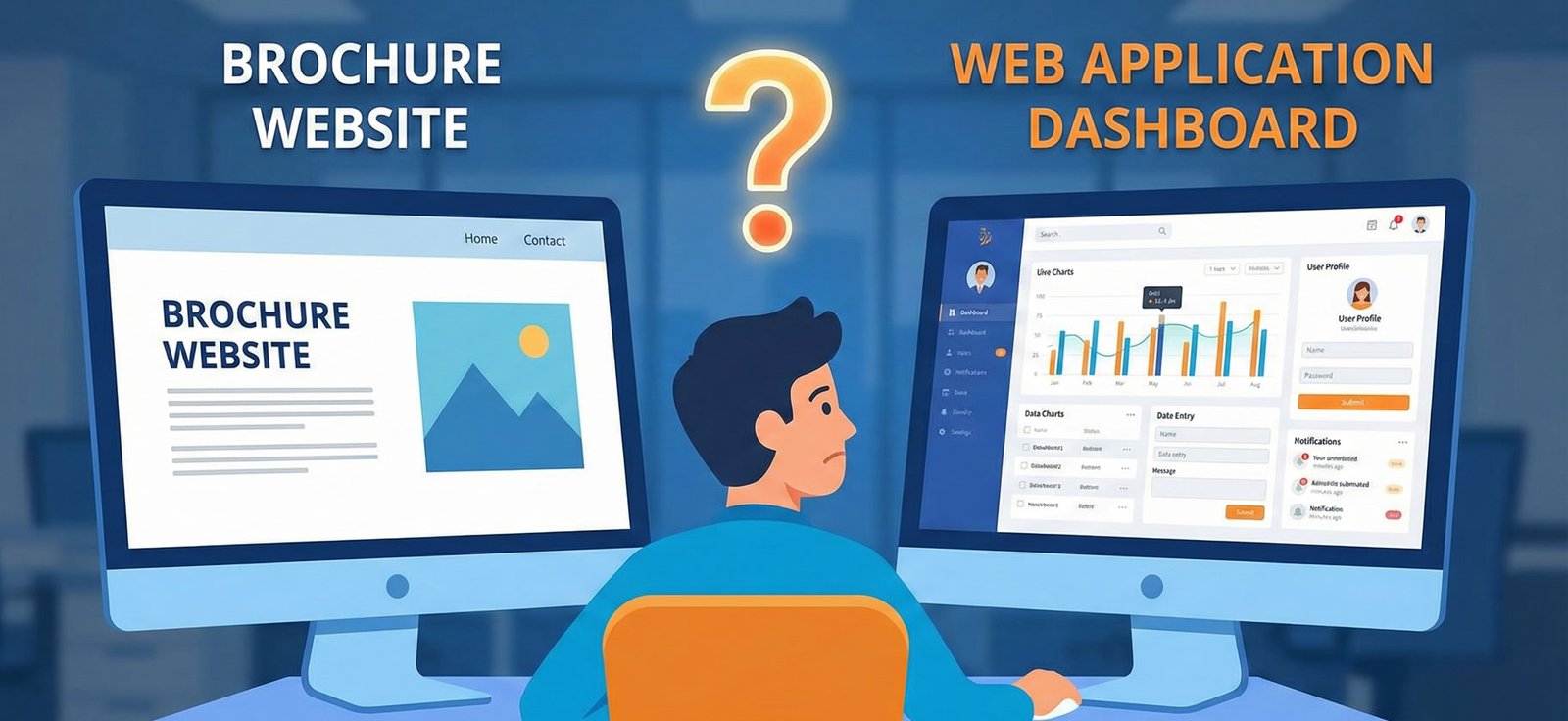
Mobile App vs Website: Which Should You Start With?
A website or web application is often the best starting point. Once demand, traffic and user behavior are validated, a mobile app can be introduced as a growth extension.
Many successful platforms start with a website and later expand into mobile apps.
Final Thoughts: The Right Choice Depends on Strategy
A mobile app is a powerful tool but only when it aligns with your business goals, users and budget. The key question is not “Do I want a mobile app?” but rather “Does my business need one right now?”
Making the right decision saves cost, improves user experience and sets your digital strategy on the right path.